|
Page Updated
General Notices  Selected Slides
 Memory Pages
Bee Line Michigan Div. V.G. and R. RR Train Orders Hand Signals NYC Power NYC Mechanical Drawings '43 Time Tables '44 Timetable Big 4 Memories Columbus Div. Delco Tower DOW Tower Elwood EA&L RR Indian Creek Circus Trains RB&BB Train
Contact the Webmaster: Roger Hensley
|
Back When
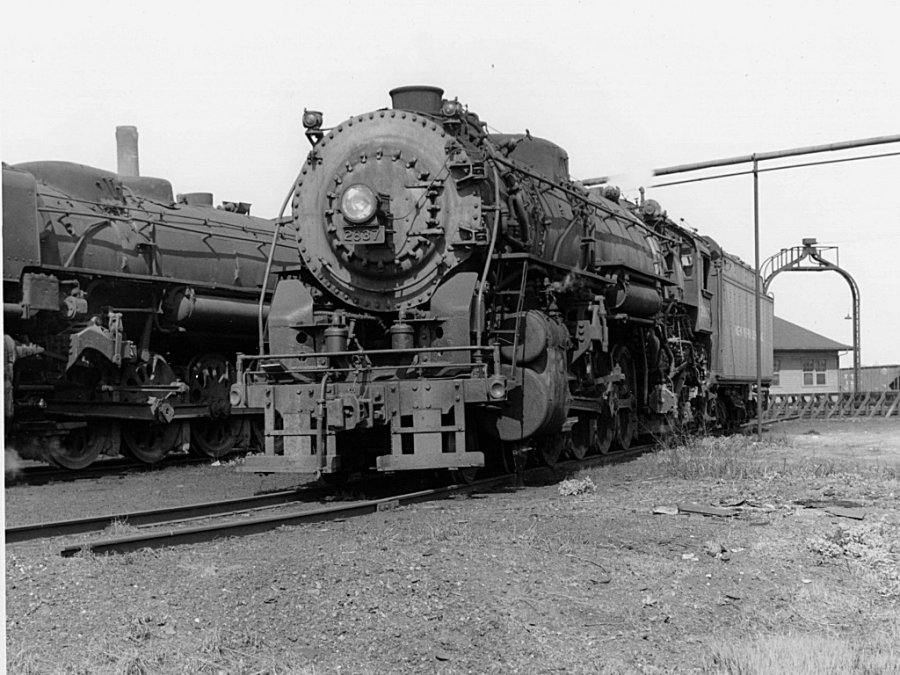
South Anderson, IN. sometime from June through August 1954. Train #74 on duty 12:30pm. Parked the auto and after getting my grip from the trunk, walked in the east door of the roundhouse. At this time there are 16 stalls and about half have locomotives in them, either dead or getting some kind of repair. Only one is fired up and that is a yard engine. Walking out the west door of the roundhouse, I walked over to the engine dispatcher's building to sign in.
Bill was the first man hired after the depression. At this time, he is about 33yrs. old.
That done, I check the fire, open the butterfly doors and the fire looks good. After checking the jets that blow the coal into the fire box, they appear to be okay, we start the stoker slowly and get an idea of the pressure needed on the jets. Next roll in a heel at the distributing plate. Not a large one but big enough to make the coal stay on the grates. When I checked the fire at the start, I turned the blower on and if the fire had stayed a blue, purple color I would have rocked the grates enough to have broken the crust that was forming which would have turned into a clinker. About this time Bill has finished his rounds and has climbed on the engine. Bill makes an air test of the engine brakes and after that turns on the bell, gives a toot toot with the whistle and starts moving. With the cylinder cocks open, blowing the water out of the cylinders, we move out of the roundhouse tracks to the yards and our train. After coupling to our train in #1 track and pumping up the air, Bill can see a signal at the rear of the train to set the brakes. Drawing off 15 lbs. of air and placing the brake valve in lap position, he waits for a release signal of the brakes from the car inspector at the rear end. Receiving a release signal, Bill places the brake valve in running position and waits for a high ball. At this time, the conductor arrives with the paper work. We have 68 cars, 58 loads and 10 empties, a total of 4000 tons. 10 for Marion, 15 for Wabash, 6 for Claypool, 1 Milford Jct. and 3 for New Paris Jct., the rest for Elkhart. This is a Tuesday and the local is coming south and we have a meet with him at Fairmount. The conductor starts back to the rear end and Bill gets a highball from the rear end. While all of this has been going on, I have my fire built up, the brakeman has permission to come out of the yards, cross over the B-line main and head north. We will have more on our trip to Wabash on #74 in a few days. Maurice Lewman
|

This page is written, maintained and hosted by: Roger P. Hensley, madisonrails@railfan.net